Films are available directly from Ben Cashdan
Contact: [email protected], +27 83 273 8889
Films are $25 (US) for individuals,
$100 (US) for institutions such as university libraries.
WHICH SIDE ARE WE ON? (55 mins)
This is a guerrilla-cinema-style compilation of clips, constantly evolving and presented interactively by the filmmaker. With clips of local struggles in the townships of South Africa and material from the Durban Anti-Racism Conference in September and the World Economic Forum in Davos, Switzerland this year, the film raises questions about the impact of globalisation on ordinary South Africans. It also looks at the stance taken by ANC politicians - increasingly a part of those elite global institutions targeted by anti-globalisation activists. Hear Thabo Mbeki on the anti-globalisation protestors, George Soros on global economic injustice and Louis Michel (Belgium's foreign minister and chair of the EU Presidency) on colonialism's brighter side! Plus see Soweto activist Trevor Ngwane taking on Soros (in Davos) across a satellite link from the World Social Forum on Porto Alegre, Brazil.
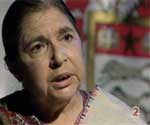
"All my life I’ve stood for the poor. And now I’m standing for the poor. If that’s standing against the ANC then I’ll be standing against the ANC." --Fatima Meer.
Violence broke out when police and security forces moved in to Chatsworth, Durban last year to evict Indian residents from their council flats. The same families were evicted 36 years ago for being the wrong colour; now their crime is poverty. The council argues that the residents are criminals and druglords. The community defends them, accusing the council of covering up for its failed housing policies. The film illustrates the struggle for shelter which is growing across South Africa.
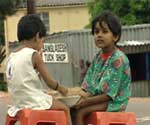
Indian children play in the "Bangladesh" slum in Durban, South Africa. Unemployment here is around 80%.
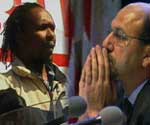
"The problems of Africa started centuries ago with colonialism and slavery. We don’t owe the World Bank anything. They owe us a life!" -- Trevor Ngwane
The meetings and protests at the World Bank in April 2000, seen through the eyes of two South Africans. In the Bank, finance minister Trevor Manuel. On the streets, Soweto activist Trevor Ngwane. Through the oft-humorous adventures of the Two Trevors we get a unique inside picture of the commanding heights of the world economy, and of the protest movement that has emerged to challenge those commanding heights.
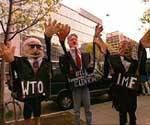
30 000 protestors took to the streets in Washington DC on April 16 2000. They called for immediate debt cancellation and the closure of the World Bank.
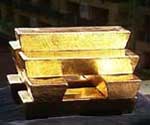
In 1969, Switzerland imported 75% of apartheid gold. In the debt crisis of 1985, Switzerland came to Pretoria’s rescue, saving the apartheid regime.
Who made billions selling South African gold under apartheid? Who financed Pretoria during the 1980s, despite sanctions? Who came to rescue PW Botha during the debt crisis of 1985? Who is being targeted by civil society to pay South Africa compensation for their actions over the past decades? Answers to these questions and more contained in this film about Swiss Banks' involvement in South Africa. Made for Swiss TV. Shot in South Africa and Switzerland.
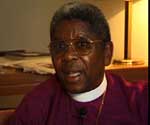
"The Swiss Banks must make reparations to the people of South Africa. And we don’t want to wait 40 years like the holocaust victims." -- Archbishop Ndungane.
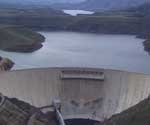
Katse is the highest dam in Africa. It is one of four under construction in Lesotho. Twelve of the world’s largest construction companies are accused of bribery in the project.
The Lesotho Highlands Water Project is supposed to provide 70 cubic meters of water per second to thirsty consumers in Gauteng, via tunnels under the Maluti mountains. But since the recent corruption scandal broke, people have started to question the largest dam project in Africa. What about the displaced people? And the construction companies and bureaucrats pocketing our tax money? What is the impact of these costly dams on the poorest families in Alexandra and Soweto, who can no longer afford their water bills? Most of all, do we really need all this extra water?
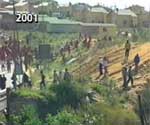
In Feb 2001, Joburg Metro sent in the "Red Ants" – security officers – to evict families from the banks of the cholera-infected Jukskei River in Alexandra. Many residents in Alex have no running water.